CASE STUDY
Case Study #1 — Edgbaston Lounge & Dining Renovation, 1950s Detached House
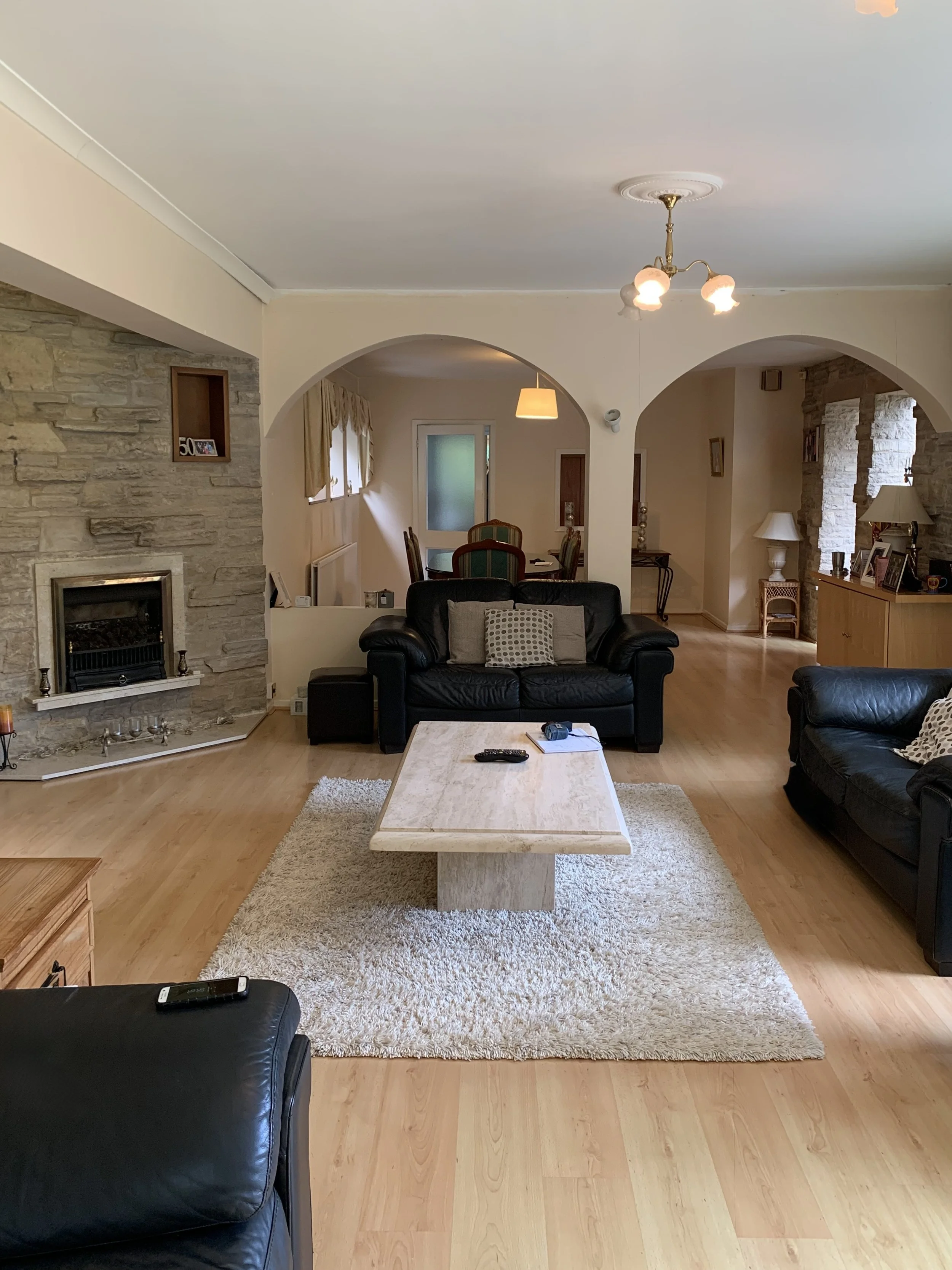
BEFORE - Dining & Lounge view from lounge
Project Overview
This 1950s detached home featured striking modernist elements—concrete structure, stone cladding and over 50sqm of open-plan space—but the lounge and dining areas felt dated, unstructured and lacking cohesion. With multiple doorways and windows, there was no clear focal point or sense of flow.
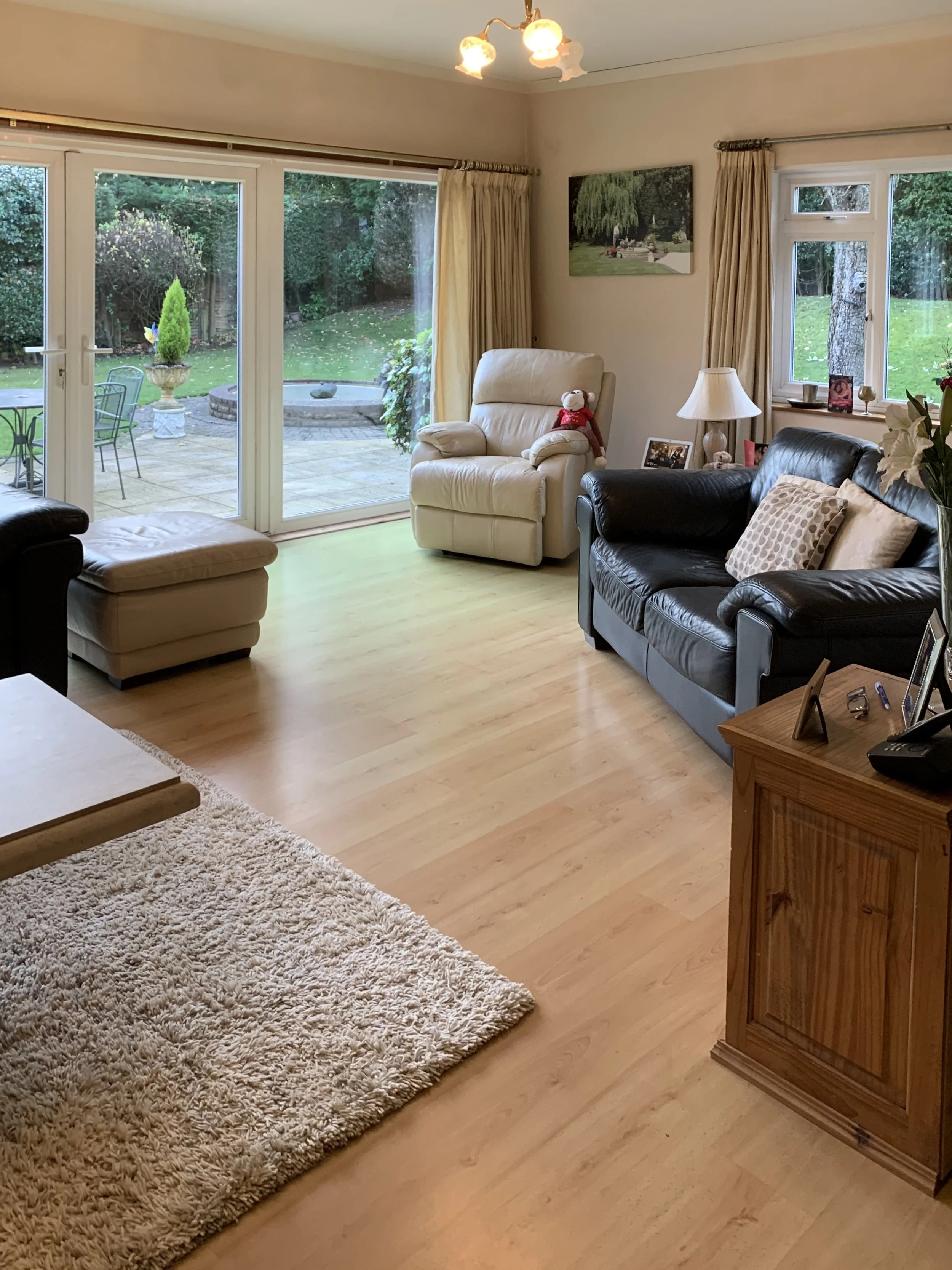
BEFORE - Lounge view
Brief & Challenges
The clients wanted a modern, timeless, and predominantly white interior that felt warm and inviting. The space needed to work for everyday living for a couple, their daughter, and grandparents, while also accommodating large family gatherings. The main challenge was creating intimacy and structure within such an expansive room, with limited wall space for a focal point.
Design Approach
We focused on establishing cohesion between the lounge and dining areas, creating subtle zoning, and introducing warmth through natural materials and texture. The design remained neutral and modern, with a calm, architectural sensibility.
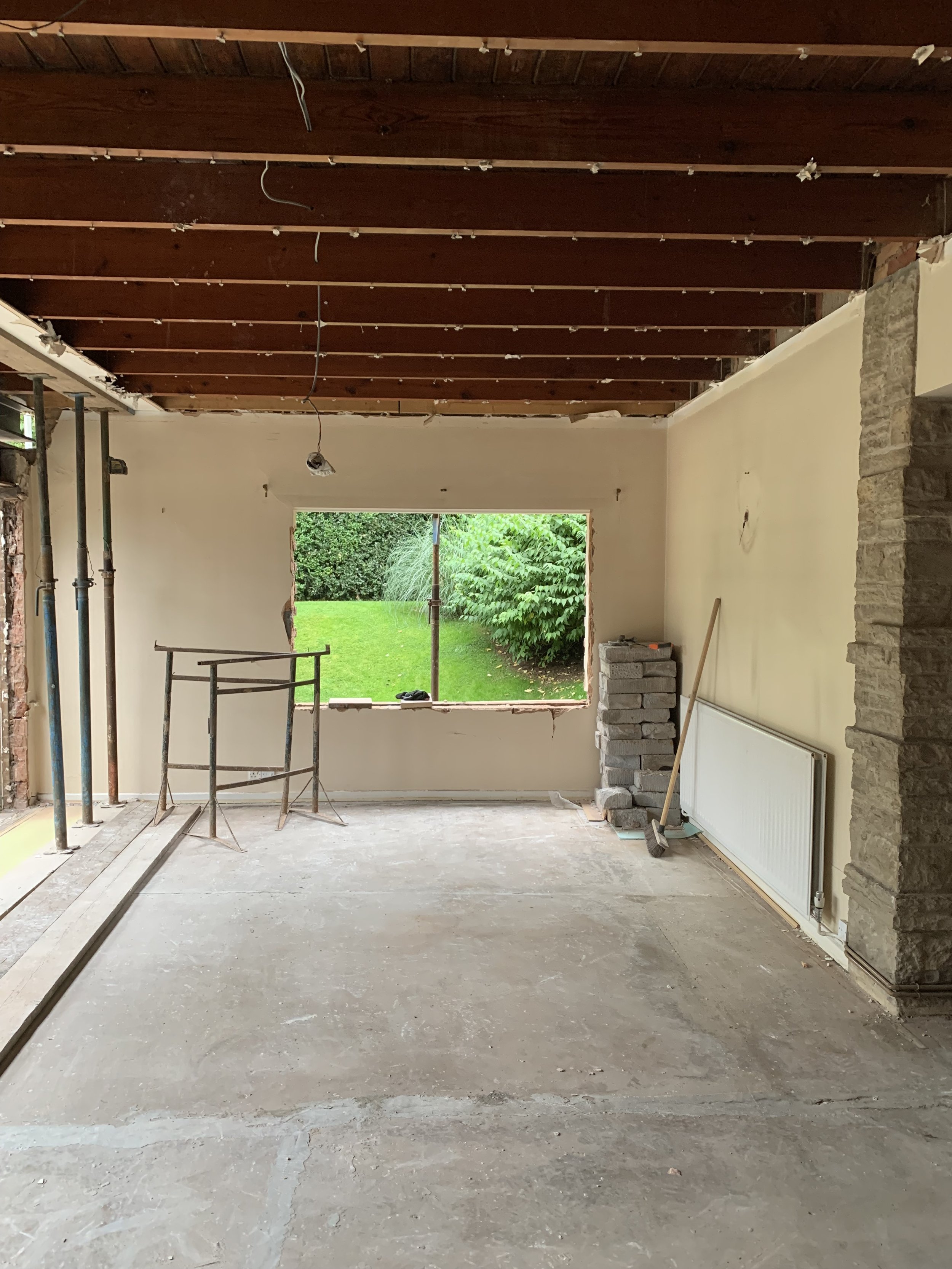
Mid-construction - removed window
Key Architectural Moves
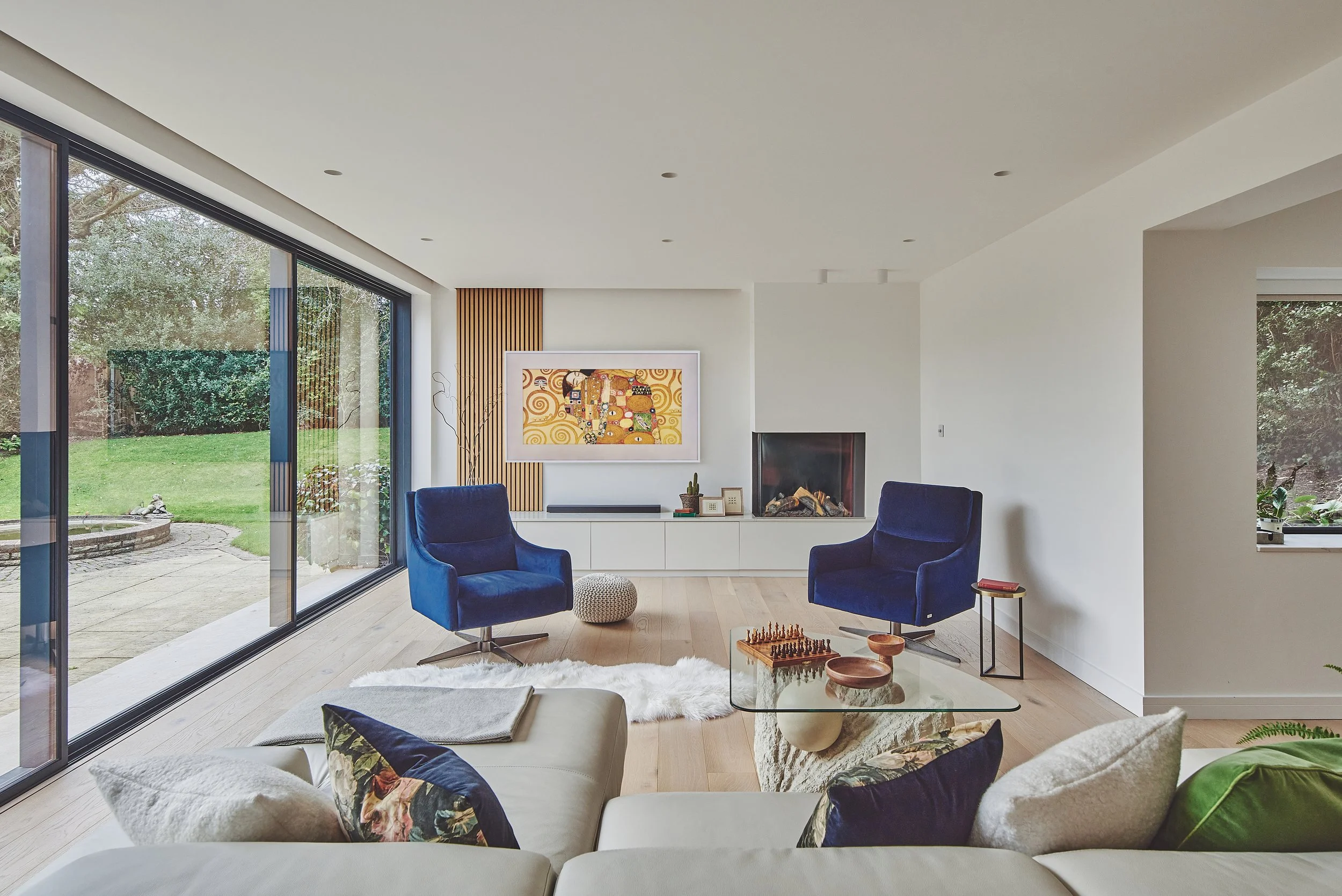
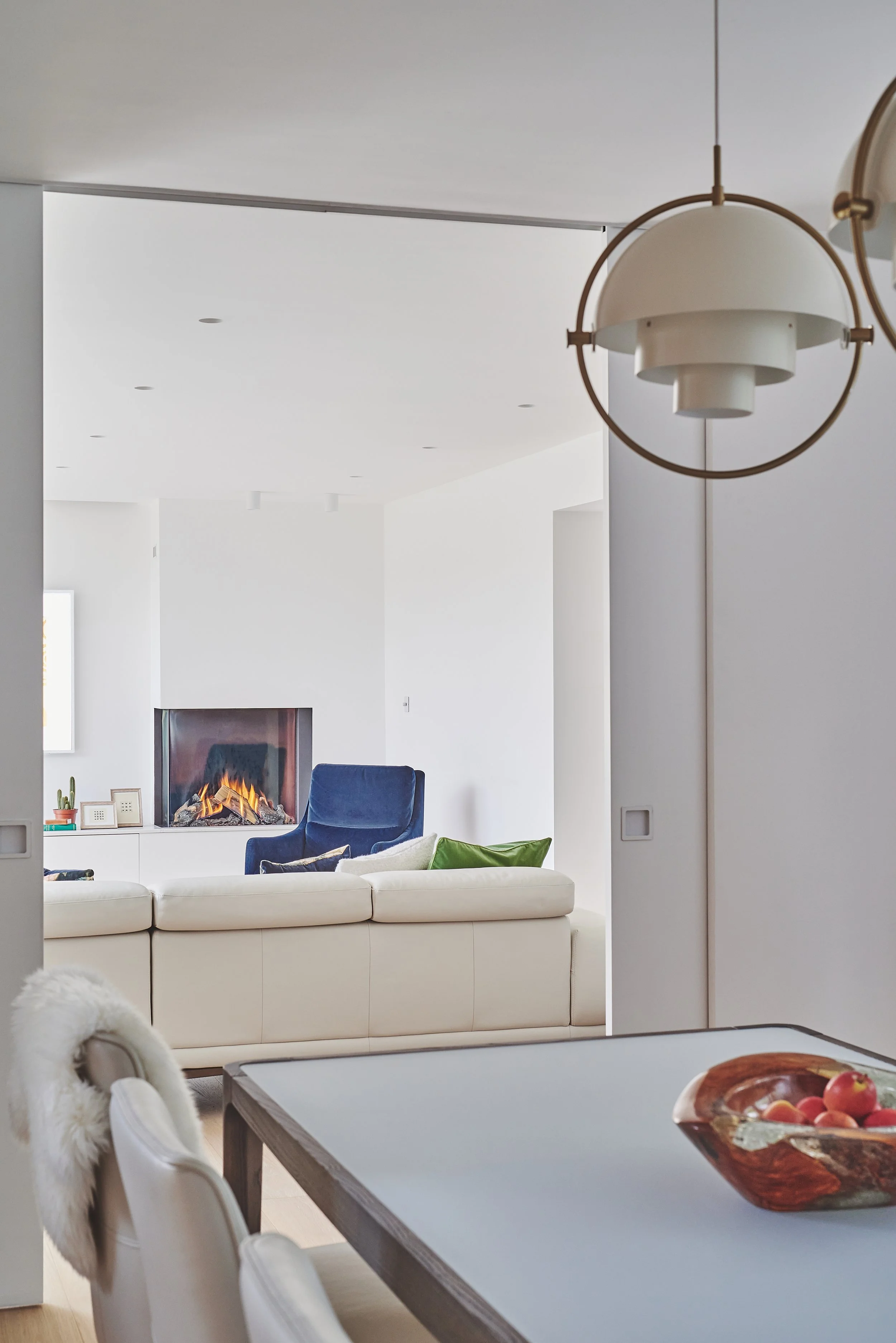
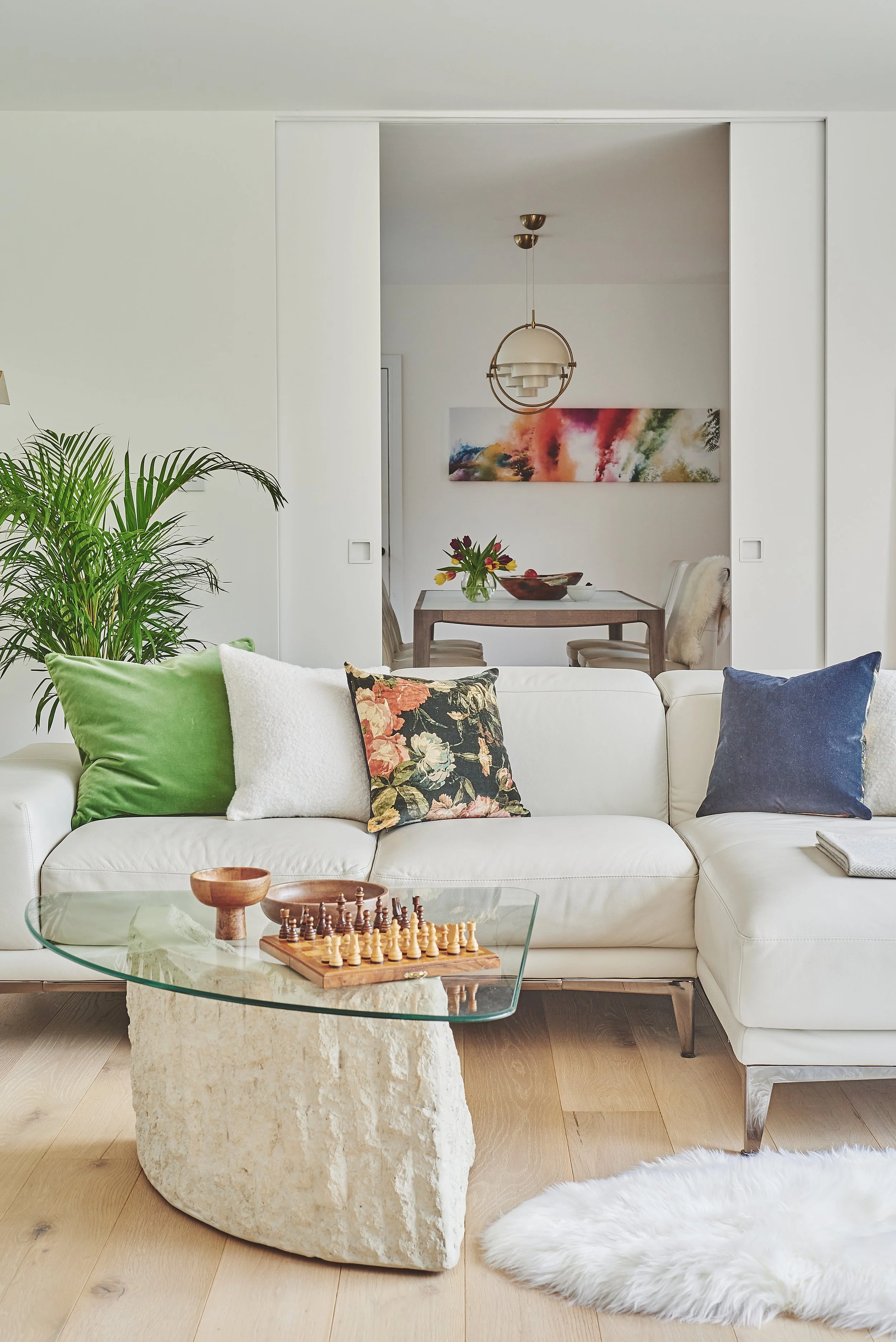
To anchor the room, a redundant window was closed to create a strong focal point for the TV and fireplace wall. New triple-panel floor-to-ceiling sliding doors opened the lounge onto the garden. Double pocket doors were introduced between the lounge and dining room, allowing the spaces to be connected or separated seamlessly.
Material Palette
A restrained palette of wide-plank timber flooring, warm oak wall cladding, and soft neutral finishes brought depth and timelessness to the space.
Transformation & Outcome
Previously without structure or purpose, the room now has a clear focal point, improved flow, and defined zones for conversation, TV viewing, and dining. The pocket doors disappear completely when open, enhancing spatial flexibility. The result is a warm, modern, and cohesive series of spaces—equally suited to everyday living and large family gatherings.